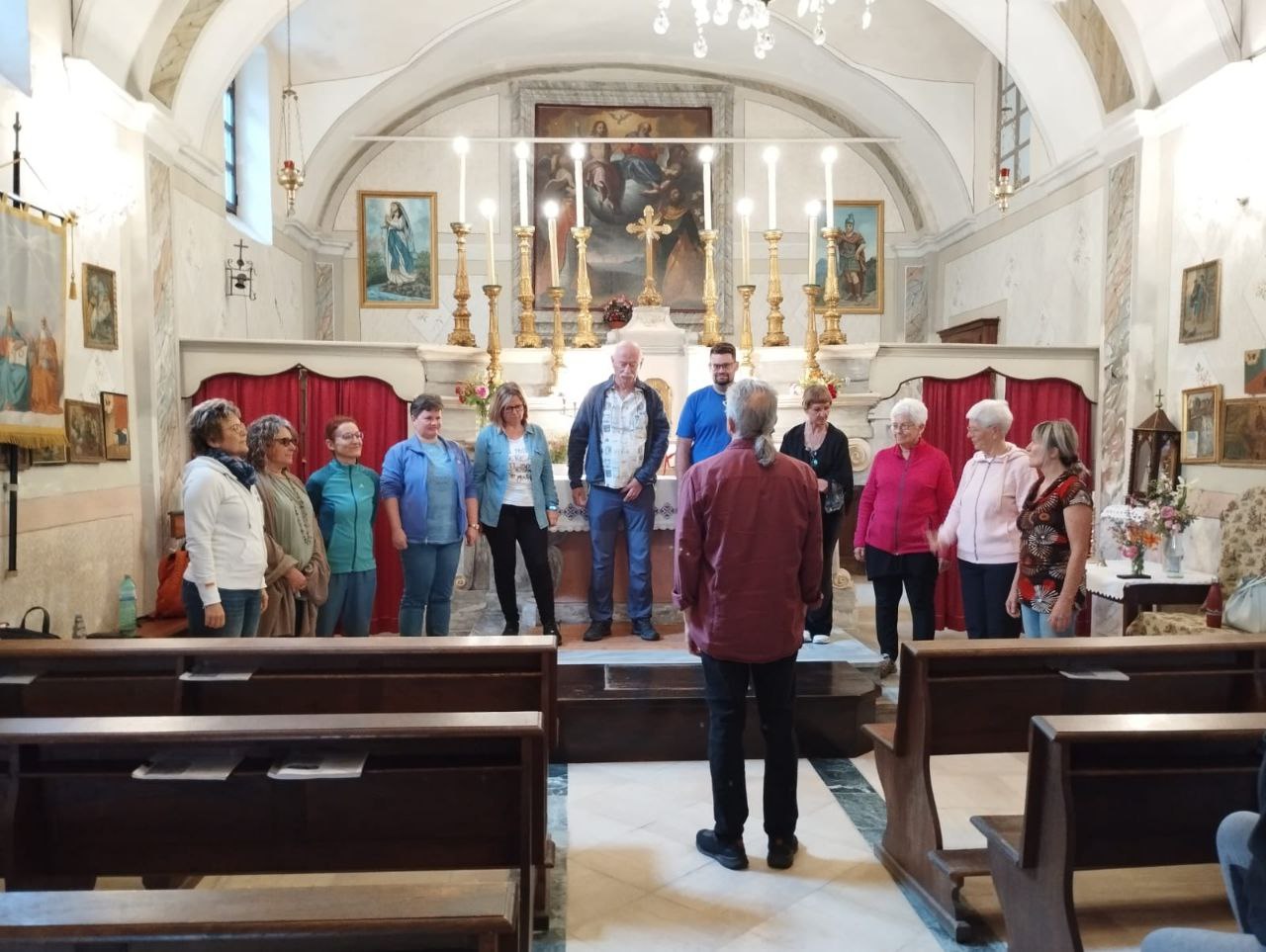
A cappella vocal singing has ancient roots, tracing its origins to the very first centuries of Western music. The term “a cappella” derives from the Italian “in cappella,” which referred to music performed in ecclesiastical chapels without the accompaniment of instruments. This form of singing developed in parallel with the Christian liturgy, where the human voice took on a primary role in worship, giving rise to increasingly elaborate vocal compositions.
The first traces of a cappella singing are found in Gregorian music, a type of monodic chant that spread to monasteries during the Middle Ages. As the centuries passed, a cappella singing became enriched with polyphony. Composers such as Palestrina and Josquin des Prez, who lived in the Renaissance, contributed significantly to the evolution of this musical form, inserting multiple voices that intertwined in complex harmonies.
During the Baroque period, a cappella singing continued to thrive, although it began to share the stage with orchestration. However, its value remained unchanged, rediscovered in subsequent eras by movements such as Romanticism and, subsequently, by the twentieth century, where a cappella vocality was reevaluated in both the classical and contemporary repertoire.
Today, a cappella singing is experiencing a new explosion of popularity, thanks to modern choral ensembles and vocal groups that reinterpret different genres, from pop to jazz. This musical form, devoid of instruments, continues to enchant and engage, celebrating the pure beauty of the human voice. In conclusion, a cappella singing is not only a cultural heritage but also a living and constantly evolving art form. CF